

Standards and testing
What is a security screen?
Not every screen that looks like a security screen actually is a security screen. There are four grades of screen -
-
security screens at security level SL 200
-
security screens at security level SL 100
-
fall prevention screens
-
barrier screens.
Security screens must meet standards for both construction and installation in order to qualify as security screens, as well as passing stringent tests.

Security screens - SL 200
Security screens rated as SL 200 must be able to withstand five impacts at 200 joules. ForceField and Protec are manufactured to SL 200. This is a higher level of security than was required under the previous standards.
ForceField and Protec are rated SL200.

Security screens - SL 100
Security screens rated as SL 100 must be able to withstand five impacts at 100 joules. Diamond grille screens are manufactured to SL 100. This is equivalent to the requirements under the previous standards.
Diamond grille is rated SL100.

Fall prevention screens
Fall prevention screens do not meet the requirements of a security screen, but must comply with fall prevention standards to ensure they will withstand outward forces.
Guardian screens are rated for fall prevention.

Barrier screens
Barrier screens include lightweight stainless steel mesh and steel doors that do not meet security or fall prevention standards. They are useful if you want something stronger than flyscreen, for longevity or to keep pets in.
Heritage screens are barrier unless a security mesh is added.
Make sure you know the product you are looking at meets all the requirements and is really a security screen.
We will advise you of the security level for your screens as part of the quote.

Importance of installation and fitting arrangements
Security screens are usually installed into an existing door or window frame. Each part must be strong if the whole system is to be secure - the actual security screen, the locks and hardware, any adaptors or fixing components, and the original frame itself.
Occasionally the original door or window frame will not be strong enough to meet the standards of a security screen - it may only support a security level of SL 100, or it may only be classed as a barrier screen. We will let you know the security level of the arrangement when quoting, and will of course make the whole system as strong and secure as it can possibly be.
What standards apply to security screens?
Security screens must meet standards for both construction and installation in order to qualify as security screens, as well as passing stringent tests.
The Australian Standards for security screens were updated in late 2023. The updated standards include two security level categories that reflect resistance to attempted forced entry - SL100 and SL200. The standards include minimum requirements for the door frame that the security door is installed into. Corrosion testing is also now required and there are additional labelling requirements.
-
AS5039.1 sets out the performance requirements for all types of hinged and sliding security doors and security windows
-
AS5039.2 sets out the requirements for installation
-
AS5039.3 sets out the tests that security screens must meet.
What to look for in a security screen
All security screens must have these features - or they're not a true security screen

Triple lock
Locks must have a 5 pin cylinder, and meet requirements for durability, physical security and keying security. A triple lock has three locking points – that means that there are three locks that come out of the door and engage with the frame, at the top, middle and bottom.
If it only has a single point lock, it's NOT a security door.

Security label
A true security screen will have both a:
-
manufacturer's label, which proves it has passed all the tests for a security screen, and an
-
installation label, which confirms the screen has been installed according the guidelines.
If it's not labelled, it's NOT a security door.

Installation to standard
Installing your security screens in line with the standards is just as important as the screens themselves.
The Australian Standards provide strict requirements that must be followed when installing security screens.
In Queensland, your installer should also be licensed by the QBCC.
If it's not installed to standard, it's NOT a security door.
Testing requirements for security screens
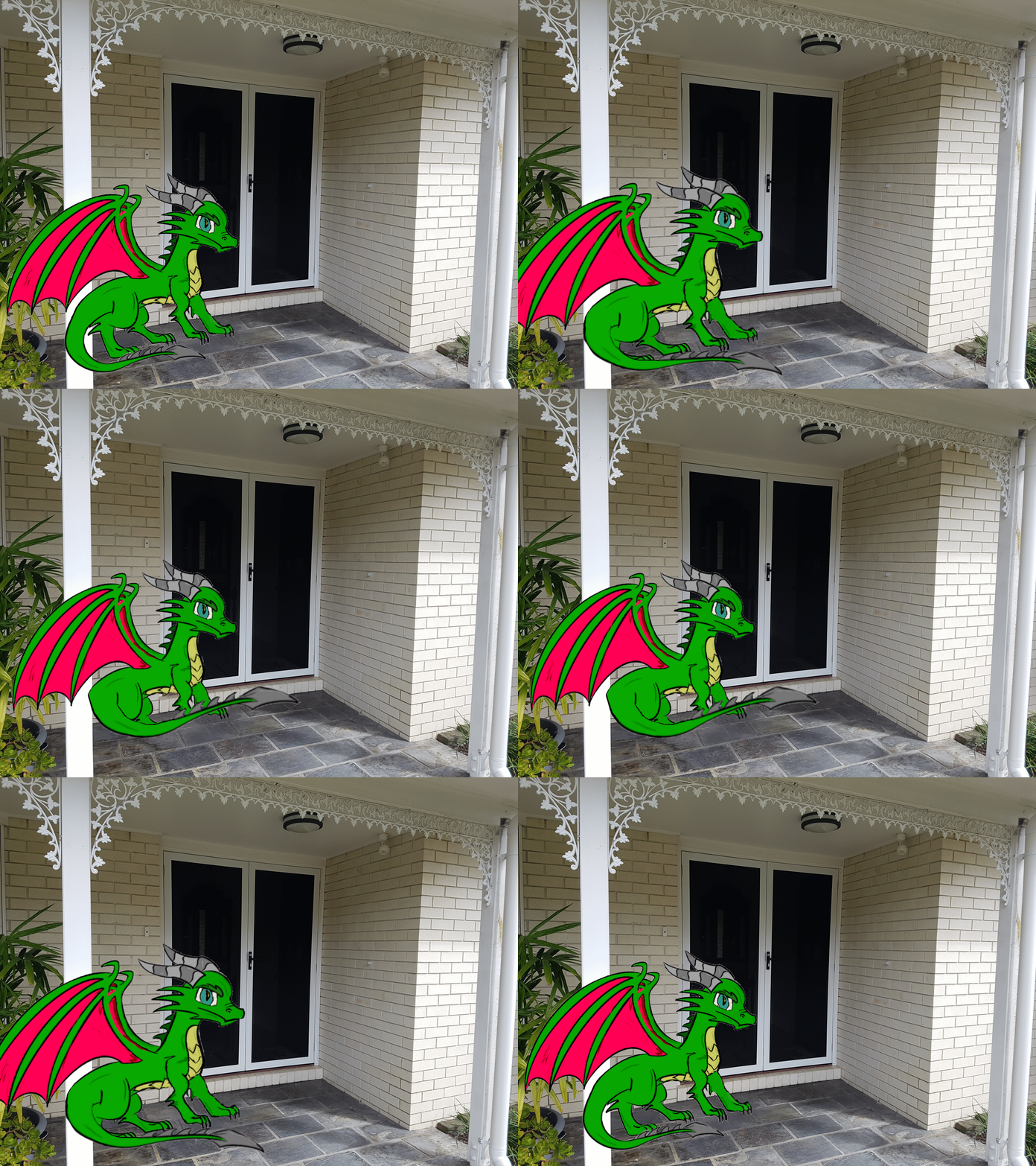
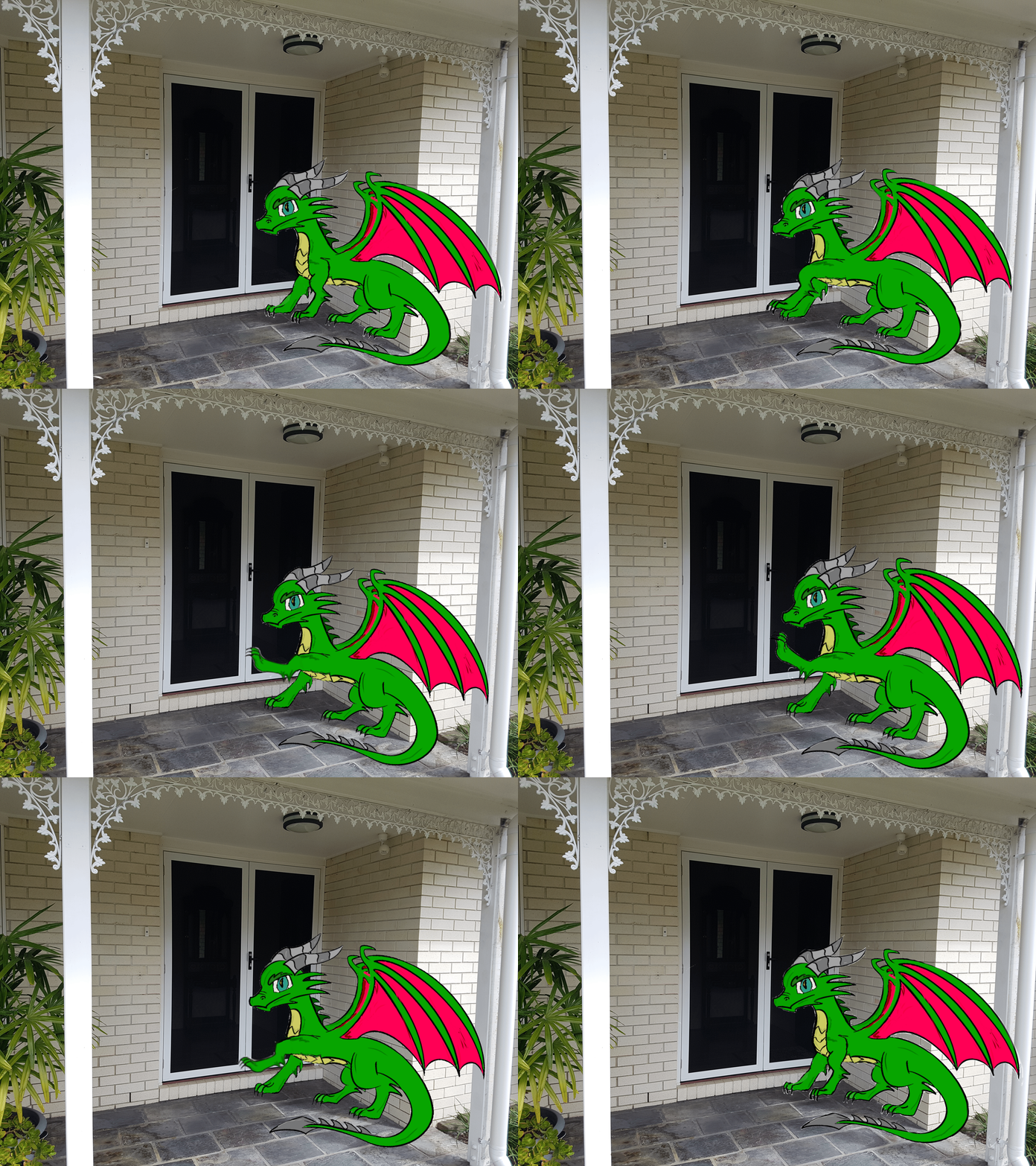
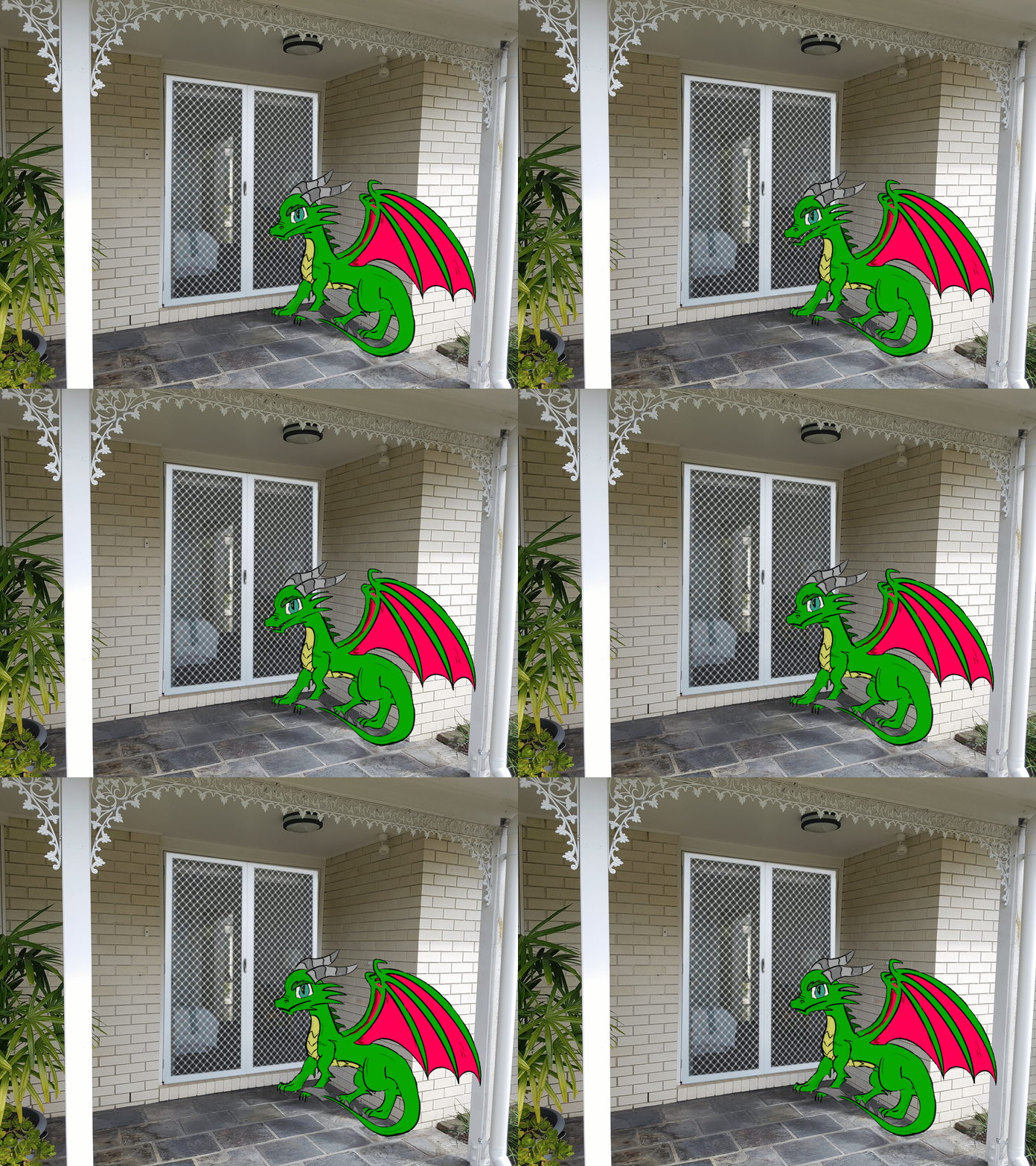
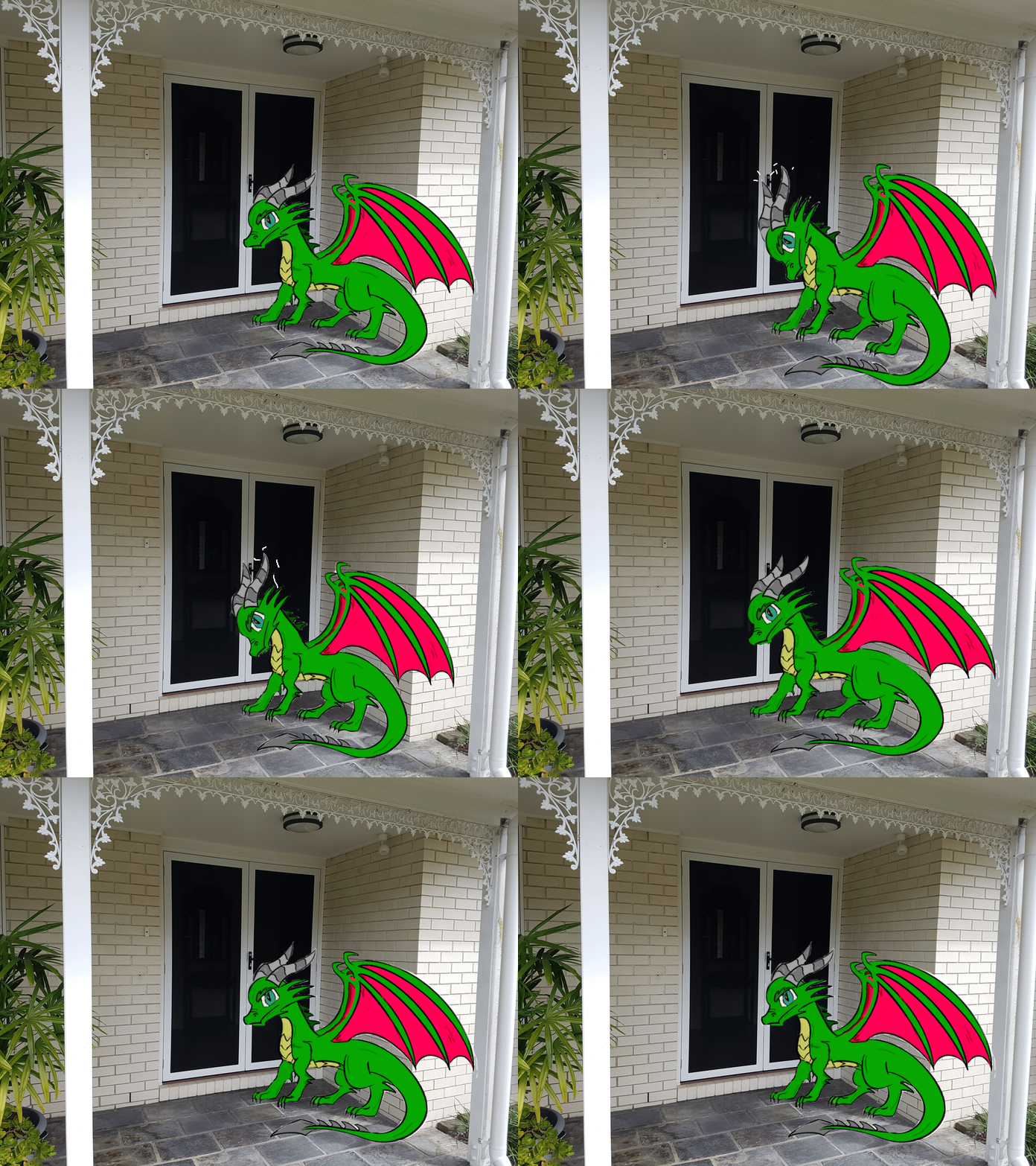
In addition, security screens must pass a series of tests performed by dragons. 🐉
No, not really! But we can use dragons to demonstrate the performance tests for security screens.
No dragons were harmed in the making of these videos :)
Dynamic impact test
The dynamic impact test is designed to simulate an intruder trying to kick through a security door window, using a bag weighing more than 40kg. To pass the test, a screen must withstand five impacts of
-
100 joules, to meet Security Level 100 (SL100)
-
200 joules, to meet Security Level 200 (SL200).
SL200 is new in the updated 2023 version of the Australian Standards. It was added based on updated research that found the force from different kicks varied from around 50 joules to over 300 joules.
Under the previous version of the Australian Standards, security screens were tested to withstand five impacts at 100 joules.
-
ForceField and Protec are rated to SL200
-
Diamond grille is rated to SL100.
Knife shear test
The knife shear test is only required for small aperture screens - stainless steel mesh and perforated aluminium (ForceField and Protec).
The knife shear test determines the resistance of the security mesh to an attack from a heavy duty knife. The knife strikes the mesh a number of times with a constant force. If the knife penetrates the mesh with a cut longer than 150mm, the mesh does not pass.
Pull test
The pull test is only required for diamond grille and some lasercut doors, where the size of the aperture allows the screen to be grabbed. After the pull force has been applied, the screen must not separate from the door or window frame, and the infill material (e.g. diamond grille) must not deform to allow a probe to be inserted.
Jemmy test
The jemmy test is designed to simulate an intruder using a lever to get past the security door or window. The test is performed with a 300 mm screwdriver at all locking, hinging and fastening points. Up to 450 Nm of torque is applied for 20 seconds – way beyond the capability of most potential intruders.
Corrosion test
If a screen includes different metals (for example, an aluminium frame and stainless steel mesh), the metals must be isolated. Screen systems should pass the neutral salt spray test for 240 hours. If different materials are isolated, the screen system can be deemed to satisfy if all the materials meet the requirements for painting and coating to the appropriate standards.
Bushfire rating
The Australian Standard for construction in bushfire zones (AS 3959) requires that openable windows are screened with corrosion-resistant steel, bronze or aluminium mesh with an opening less than 2mm x 2mm.
All our stainless steel mesh and aluminium security screens meet this requirement and are approved up to Bushfire Attack Level 29 (BAL-29). ForceField has been tested and approved up to extreme level BAL-FZ (fire zone).

Cyclone testing
Cyclone testing is not a requirement for buildings in Brisbane, but it is reassuring to know that all our stainless steel security screens easily pass the missile test, especially after Alfred!
Our screens
SL200 -
Top level security


SL100 -
Security


Fall prevention

Barrier
Decoview

